
Trophic interactions of the silverleaf whitefly (Bemisia tabaci)
The silverleaf whitefly (Bemisia tabaci) is a highly polyphagous pest known to infest hundreds of different plant species, including many crops of economic importance. In the Southeastern USA, whiteflies have historically been problematic in vegetable crops, including cucurbits such as squash, zucchini, and watermelon, where they can transmit harmful viruses. However, following historic droughts in 2016-2017, B. tabaci erupted as a severe pest in cotton. Since then and during especially dry years, B. tabaci outbreaks have inflicted heavy losses in cotton.
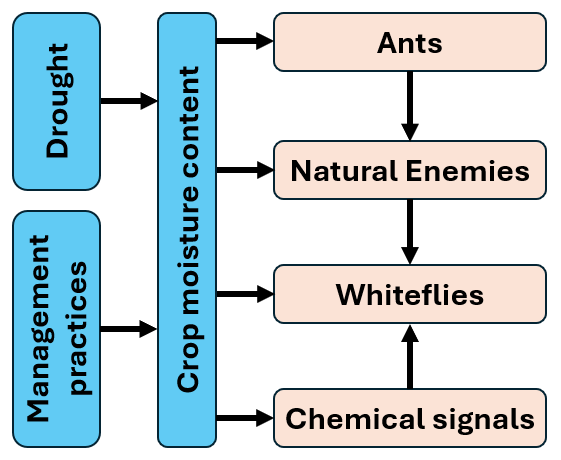
The question, of course, is why. Recent work suggests that warm temperatures and insecticide use are associated with whitefly outbreaks ( Crossley et al., 2024). However, the ecological mechanisms underlying these outbreaks are still unclear. The leading hypothesis is that drought favors whiteflies by disrupting trophic interactions within cotton agroecosystems. These disruptions can affect top-down (biological control) or bottom-up (cotton volatiles) interactions (see Fig. 1). Using years of field data, I apply statistical models to evaluate evidence for these potential pathways. I also investigate how drought influences predator diets and interactions: Does drought increase intraguild predation, and how does alternative prey availability affect predation on whiteflies? Stay tuned for more updates on this exciting work!