Using remote sensing to detect the two-spot cotton leafhopper (Amrasca biguttula)
Remote sensing
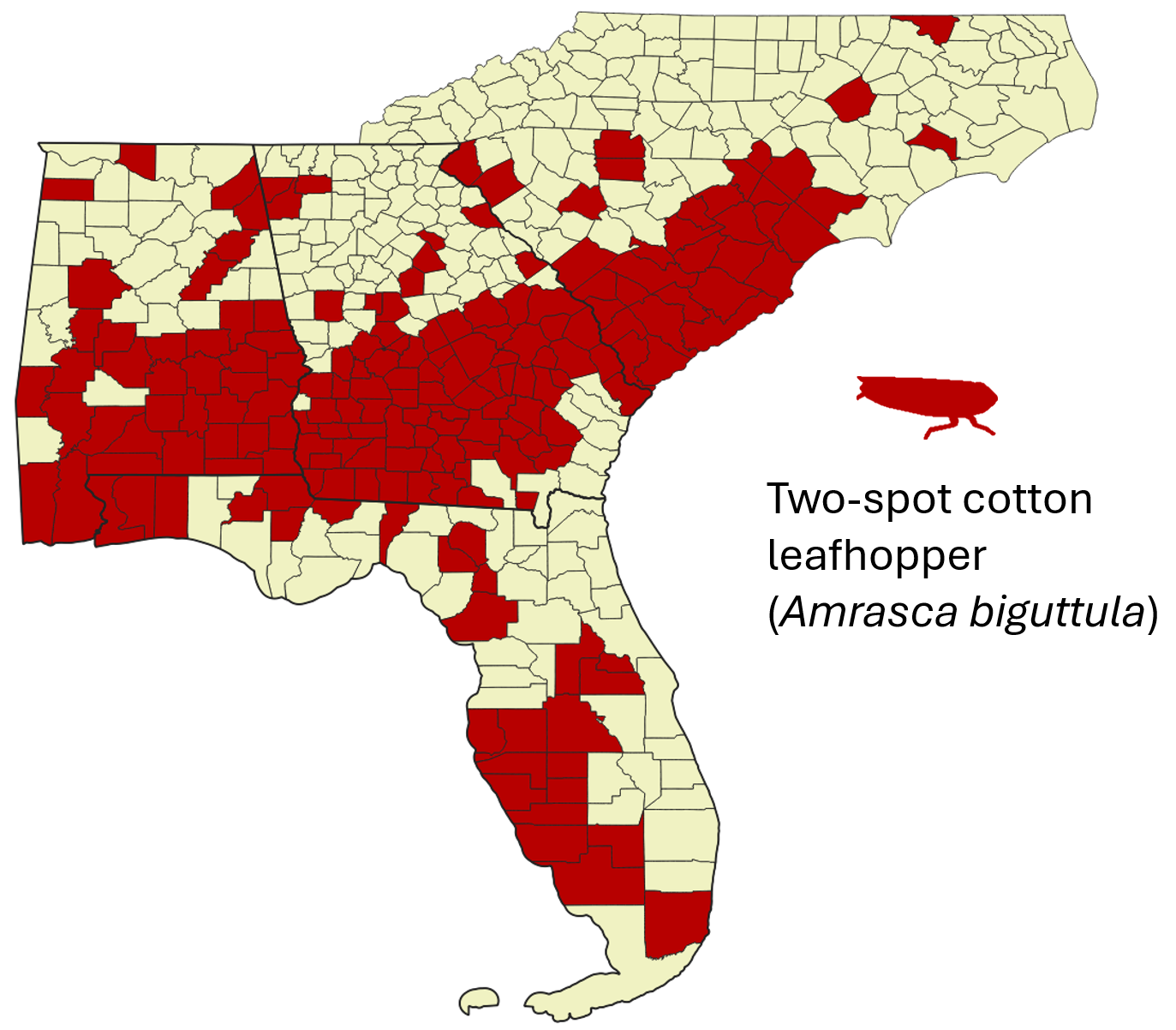
Two-spot cotton leafhopper (TSCL; Amrasca biguttula) is an invasive species that was first introduced to the USA in December 2024. In July 2025, TSCL exploded across cotton farms in the Southeast (see Fig. 1). In the span of five months, TSCL was reported from Texas to North Carolina ( Esquivel et al., 2025).
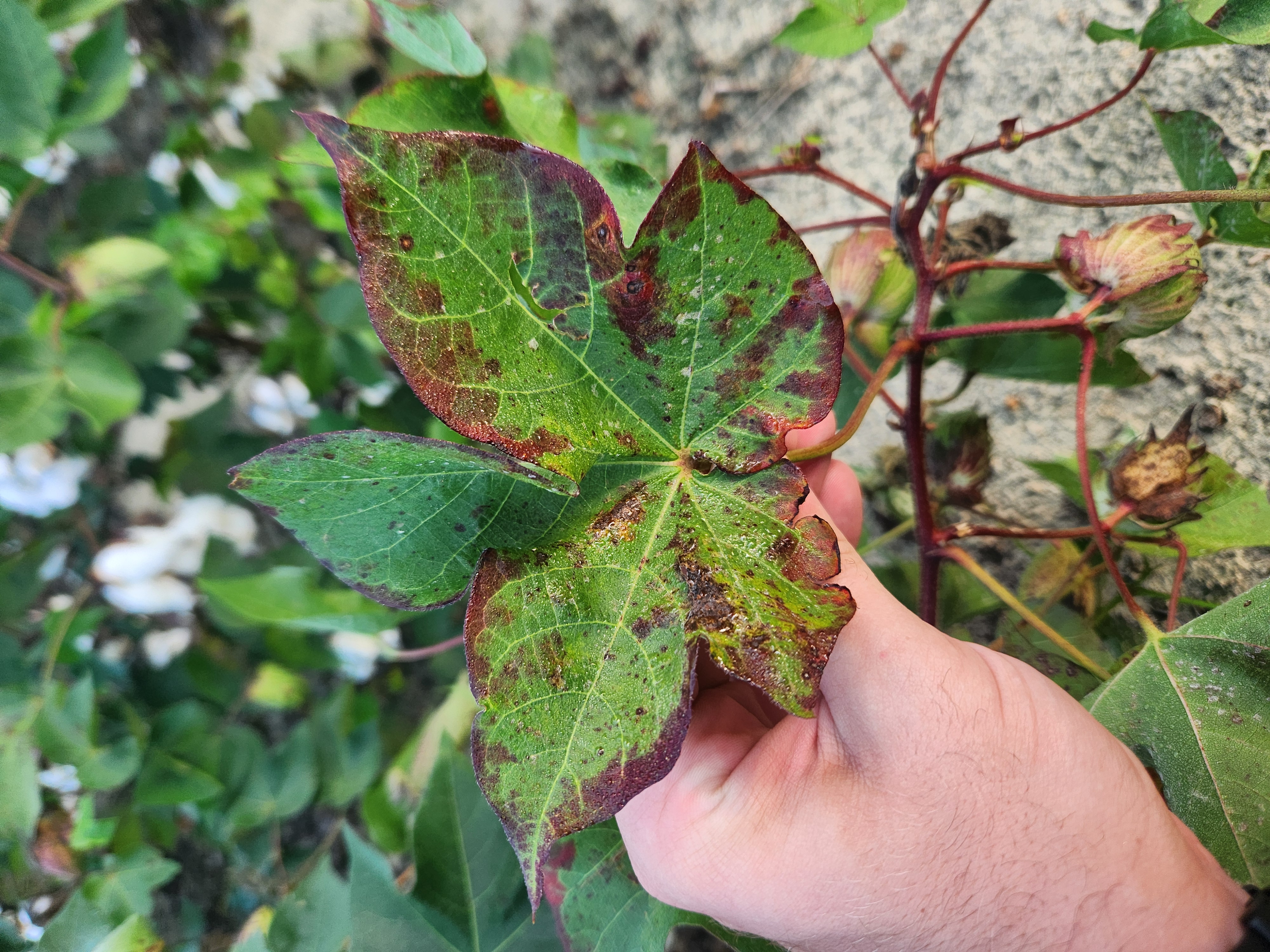
TSCL is a devastating pest of cotton, where yield losses can be as high as 20-50% (Esquivel et al., 2025). TSCL infestations cause “hopperburn” in cotton leaves, characterized by leaf yellowing and curling, and, in more severe infestations, reddening, necrosis, and shedding. The name “hopperburn” comes from the distinct reddening that forms at the edges in the earlier stages of infestation (see Fig. 2).
This distinct and rapid symptom profile lends itself to detection by remote sensing. Remote sensing is the process of monitoring crop characteristics by measuring reflected radiation at a distance, such as via satellites. I am developing a remote sensing pipeline to detect TSCL damage in cotton, which would provide a scalable means of estimating seasonal damage, monitoring outbreaks, and improving surveillance efficiency.
Population dynamics
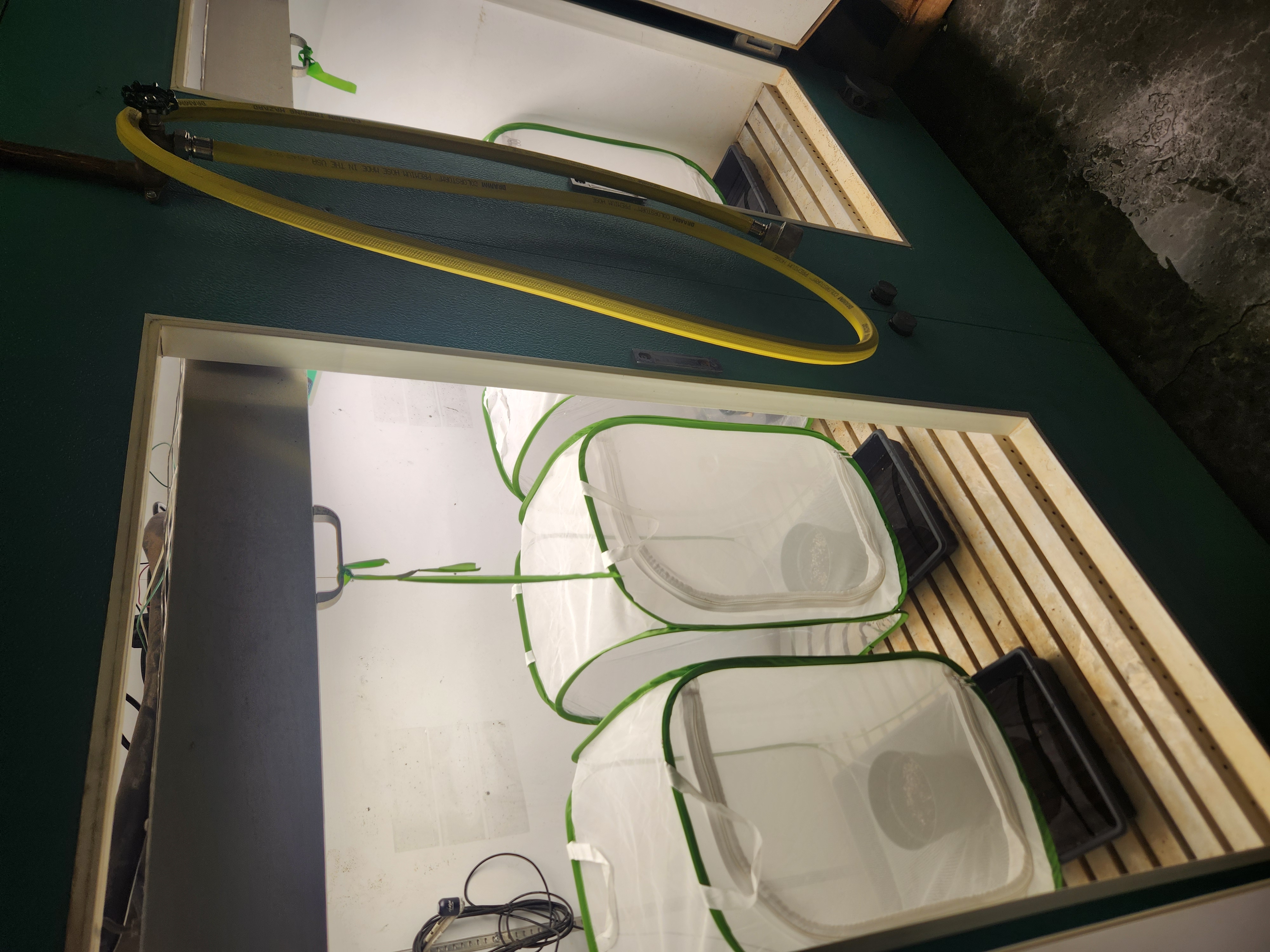
Beyond my remote sensing work, I am also investigating the population dynamics of TSCL. Part of this research aim is maintaining the UGA colony of TSCL, which I initiated with a colleague in November 2025. Our colony has since grown tremendously to hundreds of leafhoppers, which I maintain daily with the help of a very motivated undergraduate student. The next step of our experiment will use controlled growing chambers (see Fig. 3) to estimate TSCL life history parameters. The data from these experiments will parameterize a mathematical model of TSCL population dynamics.